
Ernest Hemingway supposedly once bet a group of writers that he could tell an entire story in six words.
He wrote: “For sale: baby shoes, never worn.”
Six words. A whole story.
Jesus also gives us six words that contain an entire theology of prayer:
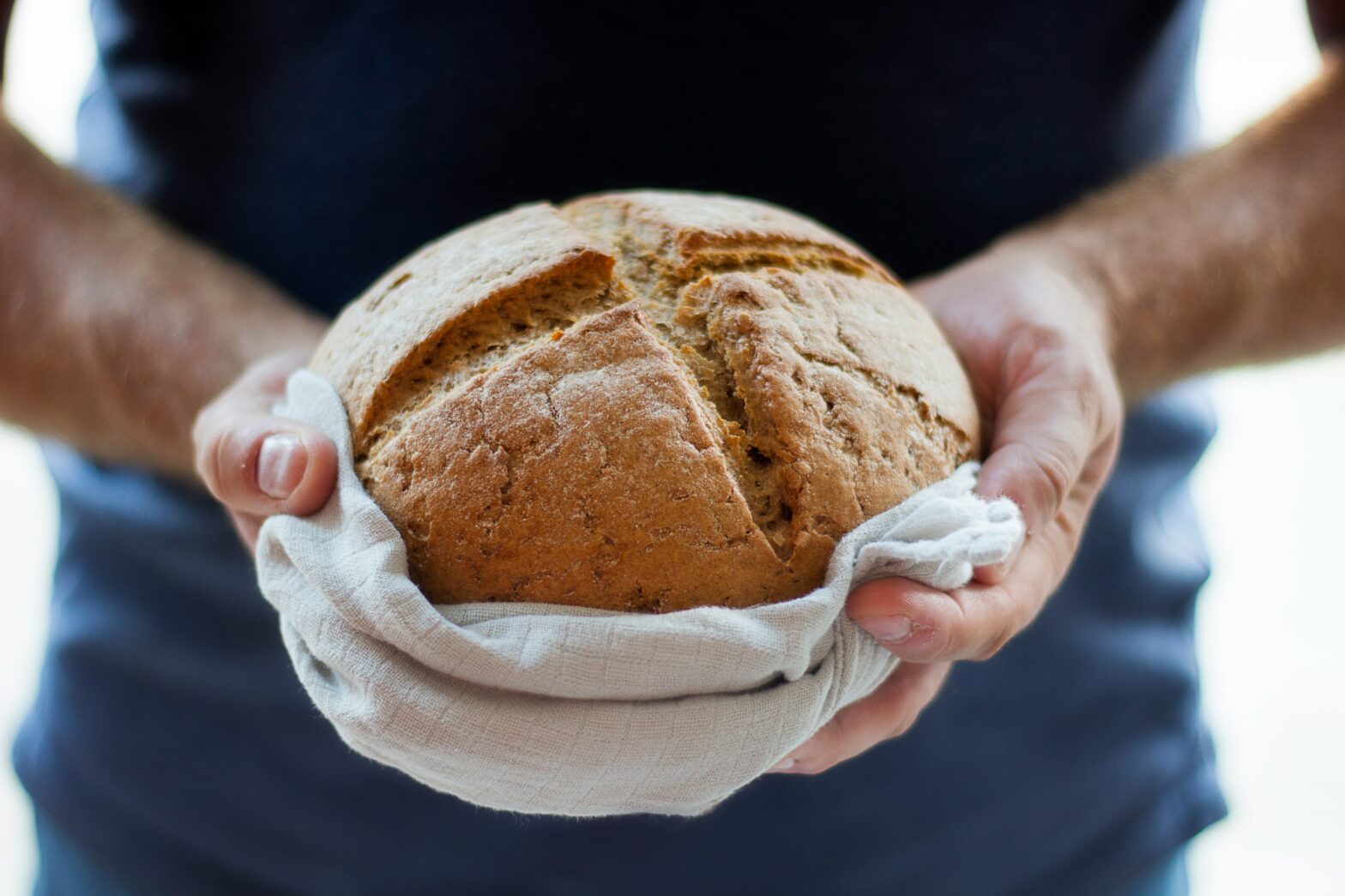
“Give us today our daily bread.” (Matthew 6:11)
Notice what He doesn’t say. He doesn’t say, “Give me today my daily bread.” He says us and our.
Nine times in the Lord’s Prayer, Jesus uses words like we, us, and our. He teaches us to pray not merely in the key of me, but in the key of we.
That changed the way I pray. For years, I naturally focused on my needs, my problems, my family, my decisions. But when I began praying, “Give us today our daily bread,” it was like I had been looking through the wrong end of a telescope and suddenly turning it around.
The aperture opened. People began coming to mind whom I might never have thought to pray for otherwise. That’s the first thing Jesus teaches us about asking God for things: Don’t just ask for your bread. Ask for ours.
Then I noticed the second thing. Jesus doesn’t say, “Give us today everything we’re going to need tomorrow.” He says today.
We all have problems that can’t be fixed today. A struggling marriage may have taken years to reach its present condition. A financial problem may take years to resolve. A relationship with a child may not be easily repaired.
So what do we ask God for? The bread we need today. Maybe today’s bread is:
Or maybe you need courage to tell someone, “I appreciate you. I respect you. I owe you a debt of gratitude.”
And sometimes the bread we need most is Jesus Himself, who said, “I am the bread of life.”
Jesus isn’t teaching us to never plan. In fact, Proverbs praises the wise person who stores provisions for the future. He’s teaching us not to live in tomorrow.
Near the end of this same chapter, Jesus says, “Do not worry about tomorrow, for tomorrow will worry about itself.” Plan for tomorrow. Pray for today.
I recently spoke with a woman whose husband died unexpectedly. Her life spiraled downward until she became homeless and lived in a tent encampment.
She survived by standing on a street corner and panhandling until she had enough money for that day. Then she spent the rest of her time looking for work.
Eventually, a pastor’s wife began visiting the encampment. She helped this woman get temporary housing through the Salvation Army, find employment, get back on her feet, and eventually reunite with her teenage son.
That pastor’s wife understood something about the Lord’s Prayer.
When we pray, “Give us today our daily bread,” we aren’t only asking God to meet our needs. We’re also making ourselves available to become part of His answer to someone else’s prayer.
Since hearing that woman’s story, I see panhandlers differently.
When someone is three feet from your face instead of twenty feet away, you begin to see a person rather than a category. My aperture has opened a few degrees wider.
So what is your daily bread today? And who can you be daily bread for?
The prayer is wonderfully simple: Give us what we need today. Not what we need next month. Not enough to eliminate every anxiety about the future. Just today’s bread.
Then tomorrow, what? We come back to our Father and ask again.
Always in your corner and on your side,
Pat
For Reflection and Discussion
Want to go deeper?
Watch the complete Man Alive Bible Study that inspired today’s Weekly Wisdom on YouTube, or listen on Apple Podcasts, Spotify, or Amazon Music.






Special thanks to our partners and publishers